
Modular and Offsite Construction: The Role of BIM in Revolutionizing Industrialized Construction
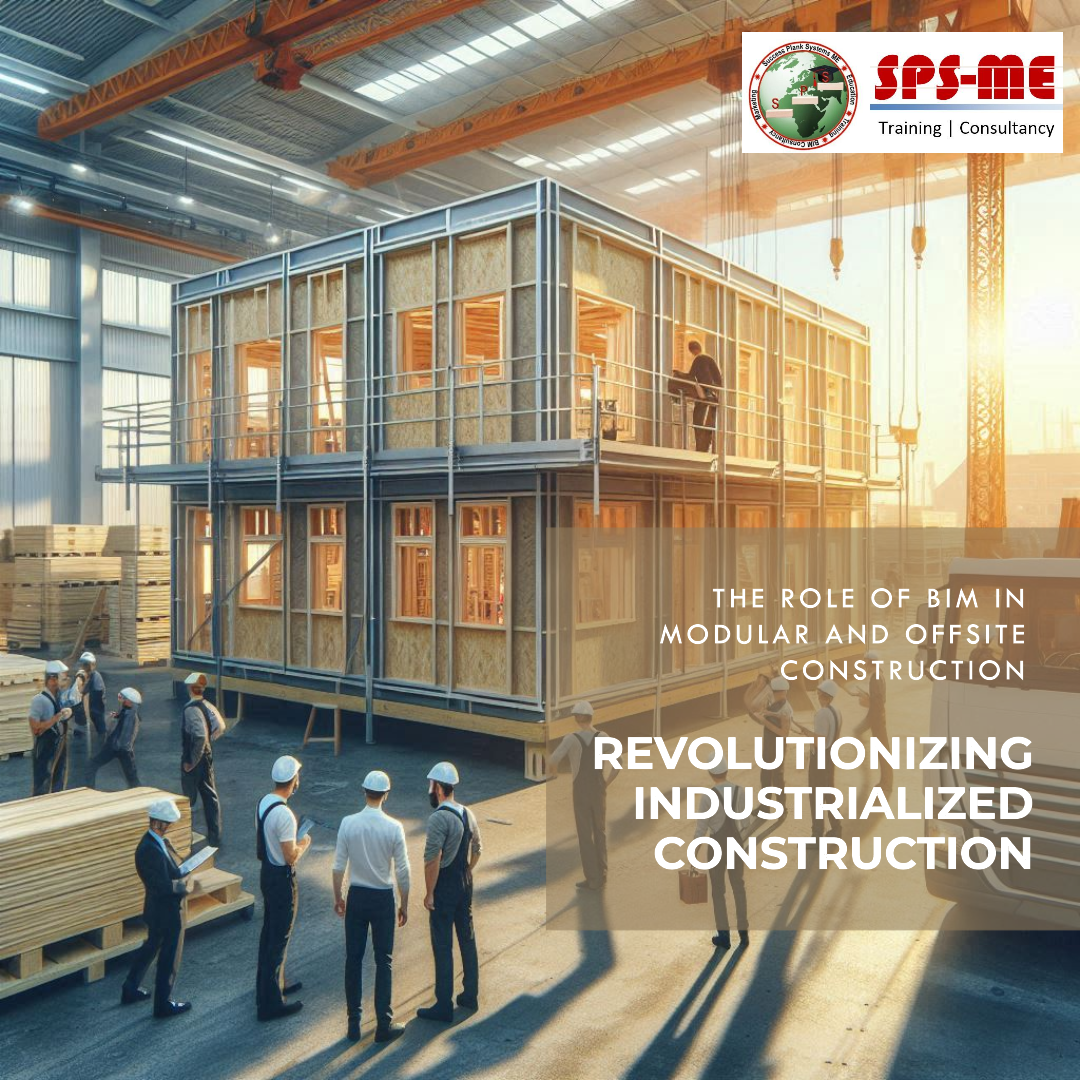
While the construction industry faces growing demands for more speed, efficiency, and sustainability, modular and offsite construction has appeared as a game-changer. Constructions are manufactured in controlled environments away from the construction site and transported for final assembly of the various components of a building. The precision, planning, and coordination that have been quite essential for modular construction have been highly enhanced by Building Information Modelling today, which is an inherent tool in industrialized construction.
In this blog, we take a view on how BIM is being applied in both modular and offsite construction; how digital models are allowing better planning and fabrication; and the growing role of BIM generally in this innovative construction methodology.
What is modular and offsite construction?
Modular: this is a method where the sections or modules of the building are built in factory conditions and transported on-site, fitting together like building blocks. The offsite construction involves the pre-fabrication of elements in the factory either in the form of complete walls, window frames, or even prefabricated rooms that are delivered to the site already to be installed.
Advantages of Modular and Offsite Construction:
Reduced Onsite Labor and Time: The onsite labors time is reduced by a great amount since most of the components are now manufactured offsite. This is again one of the major benefits that were mentioned above, that is, completion of projects fast with minimum disruption, thereby reducing impacts in urban areas.
Less waste: As factories have controlled environments where materials can be used precisely, which helps in promoting sustainability.
Improved Quality Control: Offsite-manufactured components are subject to stringent quality checks, realizing greater consistency and performance than has traditionally been achievable with on-site construction methods.
The Role That BIM Plays In Modular And Offsite Construction
But BIM is also a key enabler of modular and offsite construction, providing the required digital infrastructure for accurate planning, coordination, and collaboration.
1. Design and Fabrication Precision
BIM enables architects and engineers to create very detailed digital models of building components that can be used to inform millimeter-accurate offsite fabrication. This level of detail is crucial in modular construction, where each module needs to fit perfectly when assembled on site.
- Advantages of BIM for Fabrication:
Digital models eliminate the guesswork and human errors that could occur in traditional construction, such that prefabricated components would fit to a tee.
BIM also enables the simulation of the assembly process, allowing the professional to solve many problems that may arise during fabrication well in advance, thus reducing rework and costly mistakes.
Industry
2. Better Coordination of Offsite Components
In modular construction, coordination among the offsite manufacturers and contractors and the design teams also becomes essential, since every little component needs to fit together on site. BIM enhances communication and collaboration by its core nature of being a shared platform where stakeholders can access and update models in real-time.
- Coordination Advantages: Clash detection tools in BIM ensure that prefabricated components, such as plumbing and electrical systems, for instance, do not clash with other elements of the building.
BIM ensures the whole building can be visualized-eyeing wherein individual modules or components come together to help stakeholders comprehend.
3. Decrease Onsite Labor/Time
BIM in modular construction reduces project timelines by minimizing the number of activities on site. It will be very effective and viable for major projects or those within urban settings where space and time for construction are limited.
- BIM for Time Reduction: It allows contractors to detail direct plans for the assembly of prefabricated components with detailed BIM models. BIM also allows for better chain supply management: actual materials and prefabricated components arrive at the right time, which further reduces delays.
4. Increased Sustainability & Waste Reduction
Another one of the key drivers that sustains the growth of modular and offsite construction is sustainability. Here, BIM can contribute by offering design teams capability for digital optimization to minimize material usage and reduce waste, which also integrates energy efficiency in systems.
- Sustainability Benefits: BIM models ensure that material tracking is done, hence materials are used only where needed, hence reduction of construction waste. Energy-related tools in BIM enable designers to check the energy performance of the modular components with regard to the fulfillment of greener building standards.
5. Digital Twins and Future Maintenance
The digital models by BIM are the basis of many digital twins; in other words, the real-time digital twin of a building. In modular construction, such digital twins can be used for quite a long period even after the eventual completion of such a project for monitoring and maintenance.
- Benefits relating to Maintenance: Digital twins provide real-time insight into building system performance that allows for proactive maintenance, reducing operational costs. The BIM model will be able to serve in the planning of future renovations or repairs, with the assurance that modular elements are replaced or modified without disturbing other systems.
Conclusion:
BIM has turned a new leaf into the modular and offsite construction world, which has better design accuracy, coordination, and lesser construction time and waste. As industrialized construction becomes mainstream, BIM can only promise faster, more effective projects that also leave less of an environmental footprint. BIM can be a conduit for smarter, more innovative building in response to the challenges of modern construction when adopted into the modular construction industry.


Leave a Reply
Want to join the discussion?Feel free to contribute!