
Why Is BIM A Must Need For Your Organization?

Major construction firms are incorporating BIM into their design processes in order to reduce time and costs associated with construction projects. With the help of BIM, engineers can analyze and plan projects more accurately, and contractors can optimize their construction schedules. Additionally, BIM can help ensure that construction projects are completed on-time and within budget. With the increasing popularity of 3D printing, BIM may even become the standard way that construction projects are designed and executed in the future.
BIM is a great tool for managing large construction projects. It can be used to create and track project information, create construction plans, and manage communication between different parties involved in the project. AEC (Architecture, Engineering & Construction) companies are already using BIM to manage their construction projects. The construction industry is likely to move more toward BIM as the technology becomes more widely accepted.
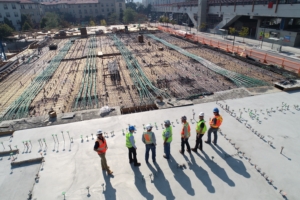
From a business standpoint, the use of BIM can offer many advantages. For instance, it can streamline the design process by allowing for quicker communication between different departments. Additionally, by using BIM, companies can gain a better understanding of their project goals, ensuring that the final product is of the highest quality.
Using BIM gives you greater visibility, better decision-making, more sustainable options, and cost-savings on AEC projects.
BIM is vital for architects, designers, and engineers who use Revit software to create building plans and analyses. Because BIM can integrate with other engineering software, it is increasingly being used for project management and cost estimating.
A study by the firm of PwC found that the global market for BIM tools and services will grow from $4.4 billion in 2016 to $9.9 billion by 2023.
There are several reasons why BIM is a must have tool. First, it can help architects and designers better understand how a building will look in actuality, which can reduce the number of revisions and also save time and money. Second, incorporating BIM into project management can help ensure that designs and construction plans are coordinated and on track. Finally, by using BIM to calculate costs, Architects can better estimate the final cost of a project and make better decisions about whether to proceed with a project.

Leave a Reply
Want to join the discussion?Feel free to contribute!